

Integrating Local Research into Conference Programs
Located in Tropical North Queensland, Australia between two world-heritage listed ecosystems, the Great Barrier Reef and the Wet Tropics Rainforest, Cairns Convention Centre (Centre) sits at the heart of a region renowned for its biodiversity, innovation, and global research relevance. Its strategic position connects it to key industries including tropical science, health, tourism, agriculture and aviation. This makes it a compelling choice for academic and professional associations seeking immersive, research-rich conference experiences. The region’s natural assets and institutional expertise create a unique environment where delegates can engage directly with cutting-edge research and real-world applications.
Field-Based Learning and Biodiversity
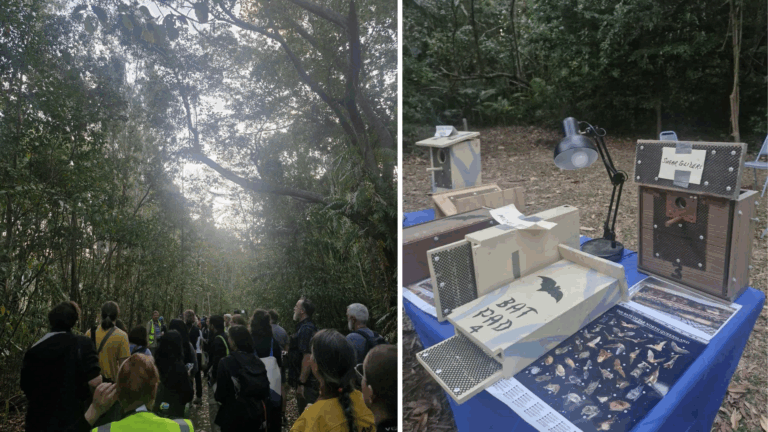
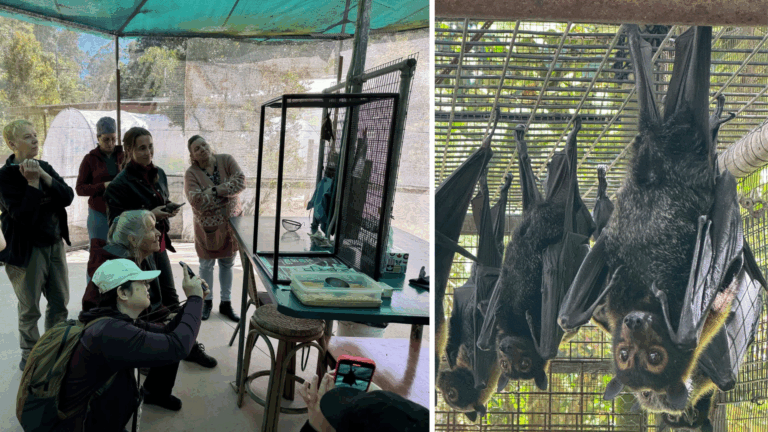
The 20th International Bat Research Conference (IBRC), held in August 2025, brought together over 400 global experts in bat biology and conservation. The program featured field trips to the Tolga Bat Hospital, Cattana Wetlands, and the Daintree Rainforest, allowing researchers to engage directly with the region’s 44 native bat species. Delegates didn’t just study bats—they stood beneath rainforest canopies at dusk, watching native species emerge from roosts, guided by local ecologists. They walked through wetland habitats, listened to conservationists explain microbat echolocation, and witnessed firsthand the delicate balance of tropical ecosystems. These excursions transformed scientific dialogue into lived experience, reinforcing Cairns’ role as a “living laboratory” for biodiversity and ecological resilience.
This immersive approach to learning continues with upcoming events like ICOM2026 (International Conference on Mycorrhiza), which will bring over 500 delegates from 40+ countries to Cairns from 12–17 July 2026. Themed “Mycorrhizas in a Changing World”, the program includes 230+ scientific talks and field-based workshops exploring ecosystem resilience, climate adaptation, and symbiosis. Organisers have placed sustainability at the heart of the event, with the logo featuring a sea turtle, symbolising ecological resilience, and stylised fungi and plant imagery.
The choice of Cairns as host city is no coincidence. Australia is renowned for its diverse flora and fauna, featuring quintessential species such as kangaroos and koalas, as well as unique and colourful birds and marine life. But beneath the soils of this beautiful continent lies an even greater diversity of life—mycorrhizal fungi—which support forests, grasslands, and agriculture. Thanks to this rich ecological foundation, Australasia boasts one of the highest per capita concentrations of mycorrhizal researchers in the world, making it a global hotspot for ecological and molecular study and a sought-after destination for international collaboration.
As Associate Professor Jonathan M. Plett, ICOM2026 Co-convenor, shared:
“We’re excited to bring this conference to Australia. The diversity of mycorrhizal research here is matched only by the diversity of the ecosystems themselves. Cairns provides the perfect stage to discuss how mycorrhizal fungi can support a sustainable and resilient future.”
Regional Collaboration in Action
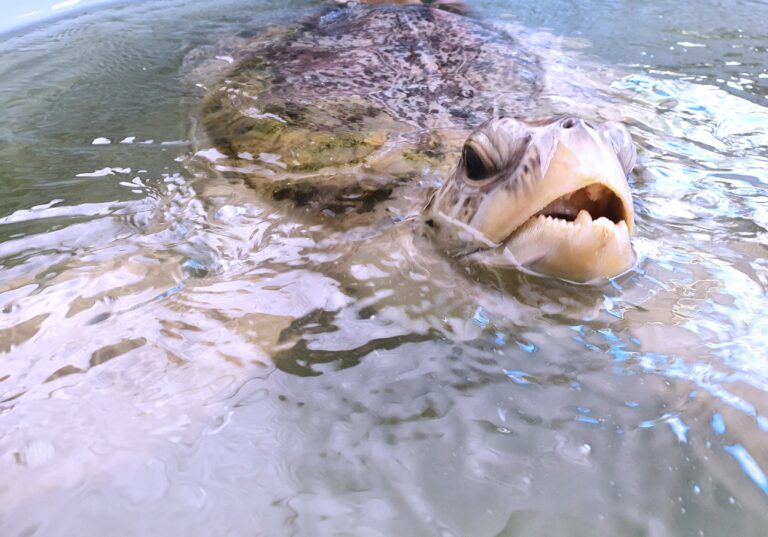
Similarly, the ANZCA Annual Scientific Meeting in May 2025 exemplifies how Cairns’ regional strengths elevate academic programming. With over 1,900 delegates and 263 speakers, the event showcased deep collaboration between national experts and local institutions. Cairns Hospital and local anaesthetists contributed to the scientific sessions, while field experiences included visits to James Cook University and the Cairns Aquarium, where delegates explored turtle conservation and anaesthesia in marine species.
As Jan Sharrock, ANZCA’s Executive Director of Fellowship Affairs, noted:
“The involvement of Cairns Hospital’s leadership and the local anaesthetic department was instrumental. Their input infused the scientific program with a grounded and authentic perspective on the realities of regional healthcare.”
The benefits of hosting in Cairns were echoed by ANZCA President, Professor David Story:
“As a college, our commitment is to ensure all fellows and trainees have access to high quality education, research, and science. This should not be determined only by access to large metropolitan cities. We also want to provide opportunities for our regional members to convene an ASM and feel the pride and satisfaction of showcasing their skills, quality of care, and region to delegates nationally and internationally.”
For Dr Andrew Potter, a Cairns-based anaesthetist, convening the ASM in his hometown was both a professional and personal milestone:
“When I was invited to chair the Regional Organising Committee, I was honoured, but also nervous. These meetings are usually held in large capital cities. But what we proved is that regional communities are more than capable of delivering events of this scale.”

AITHM and Cairns’ Research Ecosystem: Driving Innovation in the Tropics
While field-based learning and clinical collaboration are key strengths, Cairns also offers deep scientific infrastructure that supports global research agendas. At the heart of this is the Australian Institute of Tropical Health and Medicine (AITHM), located at James Cook University. AITHM is internationally recognised for its work in tropical disease research, vaccine development, and public health systems. Its Cairns campus houses state-of-the-art facilities including OGTR-certified laboratories, invertebrate research centres, and a biobank for tropical flora and fauna research.
Recent achievements include:
- Development of a dual-action cattle tick vaccine to protect livestock and reduce economic losses.
- Innovative concussion treatment using olfactory stimulation (“big sniff”) to accelerate brain injury recovery.
- Predictive software for dengue outbreaks in small island nations, aiding public health planning.
- Exploration of stonefish toxins for parasite prevention, offering new therapeutic pathways.
AITHM’s collaborative ethos and global partnerships make it an ideal contributor to conference programs, particularly in health, medicine, and biosecurity.
By embedding local research and fieldwork into conference agendas, Cairns enables delegates to connect theory with practice. This approach resonates strongly with academic associations, particularly in environmental science, medicine, and conservation, where experiential learning and regional partnerships are vital.
In Cairns, Australia conferences become immersive journeys into ecosystems, communities, and cutting-edge science. It’s a place where knowledge meets nature, and collaboration drives global impact.
Ready to Plan Your Next Conference?
If you are looking to create memorable, meaningful experiences in a location that inspires, Cairns Convention Centre is the ideal setting. Contact our sales team today at sales@cairnsconvention.com.au or call +61 7 4042 4200 to explore how bid support can help bring your next event to life.