Sustainable by Design
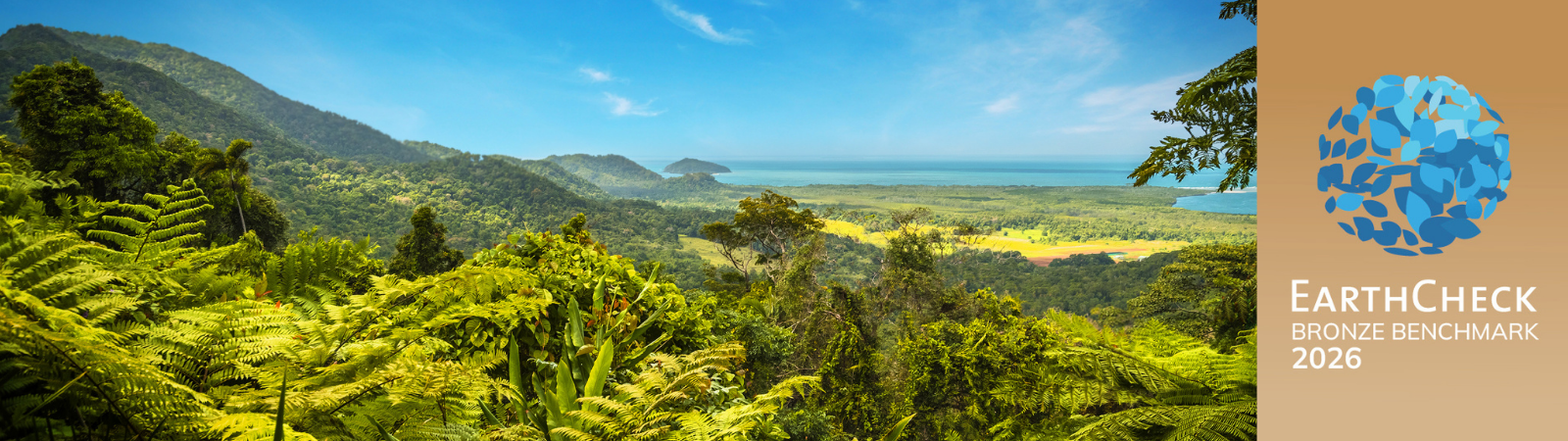
Situated between two World Heritage listed areas, the Great Barrier Reef and Wet Tropics Rainforest it is important the Cairns Convention Centre maintains stringent environmental controls.
Cairns Convention Centre is proud to be EarthCheck certified, recognising our ongoing commitment to global best‑practice in sustainable venue operations. Our sustainability approach is built into every aspect of the Centre — from architecturally designed features that reduce heat and conserve energy, to innovative water‑saving systems, responsible waste management and the use of local, sustainable materials. We also prioritise ethical and locally sourced food, support biodiversity through native landscaping, and contribute to local conservation efforts, including sponsoring Sharon the green sea turtle through Cairns Turtle Rehabilitation Centre.
Design features of the Centre
The Cairns Convention Centre expansion was designed from a passive strategy first for sustainability which utilises ambient energy sources instead of purchased energy like electricity or natural gas. The Centre 130-meter-long external screen façade is an important part of a passive sustainability approach. All of the screens have been calculated to resolve the sun angles as it’s rising through the day and at different times of the year. The orientation of the blades is all resolved via computer modelling and they change from the south to the north as it has different solar exposure. This includes the frequency of the blades, they are calculated and arranged for maximum performance.
Water Management
The Centre reduces water use through a 200,000‑litre rainwater storage system for irrigation, efficient low‑flow fittings and moisture‑sensitive watering, and the use of E‑Water for safe, chemical‑free sterilisation.
Recycling & Local Materials
Waste is reduced through onsite recycling, with more than 26,000 L of grease trap waste converted into organic compost in 2024/25. Locally sourced and sustainable materials feature throughout the venue, including reclaimed Weipa timber, Chillagoe marble and Ontera carpets, while landscaping supports biodiversity with at least 50% native plant species.
Energy Efficiency
Enhanced energy performance with Low‑E glazing, 1,200 sun blades, a living green façade and other heat‑reducing design features. New chillers, a modern BMS, energy‑efficient fans and LED lighting with motion sensors further cut consumption, while on‑site EV chargers support low‑emission transport.
Sustainable & Locally Sourced Food
At the Cairns Convention Centre, we are dedicated to sourcing products from local suppliers whenever possible. Our commitment to supporting local businesses has contributed to the growth of both established and emerging businesses, helping them showcase their products and expand their operations.
The Centre ensures that all seasonal fruits and vegetables are sourced locally, working directly with farmers and suppliers from the Tablelands to deliver fresh produce straight from the region. This approach reduces food miles and supports sustainable agricultural practices.
Our team leverages our prime coastal location by offering premium, line-caught seafood. We collaborate closely with our seafood suppliers to ensure their operations align with the Queensland Sustainable Fisheries Strategy, promoting responsible and world-class fisheries management.
By prioritising sustainability and local sourcing, we aim to reduce our environmental footprint while delivering high-quality, fresh, and ethically sourced products to our guests.
Sustainability in the Tropics
Cairns offers a uniquely climate-conscious environment for business events, with hotels, venues, and attractions all within walking distance. This compact layout promotes walking and reduces the need for transport, helping to lower emissions and support environmentally responsible event planning.
The region is home to over 190 eco-certified businesses, the highest concentration in Australia, demonstrating a strong and ongoing commitment to nature-positive practices. Adding to this sustainability focus, the Cairns Smart Green Economy initiative, led by Cairns Regional Council, aims to position the region as a leader in renewable energy, circular economy, and climate resilience. Through collaboration across sectors, Cairns continues to drive innovation and low-carbon solutions, making it an ideal destination for environmentally conscious conferences and events.
Cairns Turtle Rehabilitation Centre
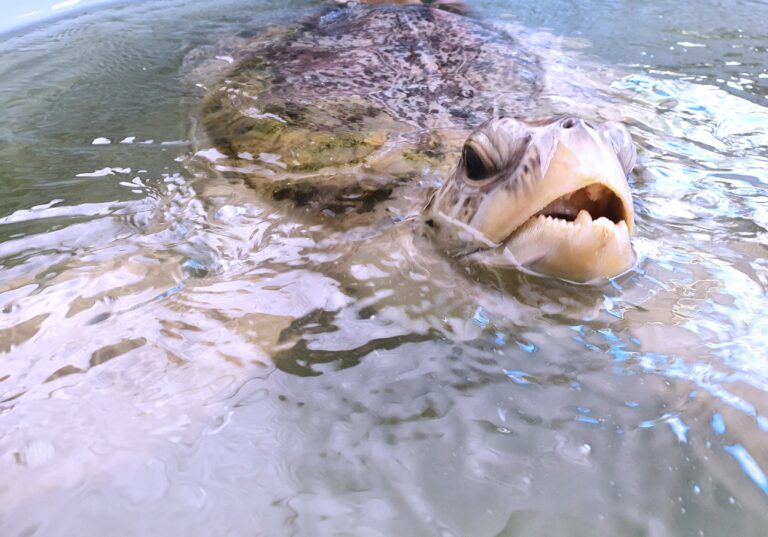
Cairns Turtle Rehabilitation Centre (CTRC) is a voluntary non-profit organisation dedicated to the rehabilitation of sick and injured turtles. The Cairns Convention Centre is a supporter of CTRC and has funded the rehabilitation of a green sea turtle, Sharon for over 2 years. Learn more about Sharon and her journey:
The Great Barrier Reef is home to six of the world’s seven species of marine turtles. A number of these are seriously threatened by a diverse range of natural and, more significantly, human induced factors. The rehabilitation facilities are located on Fitzroy Island and James Cook University.
Reforest Program
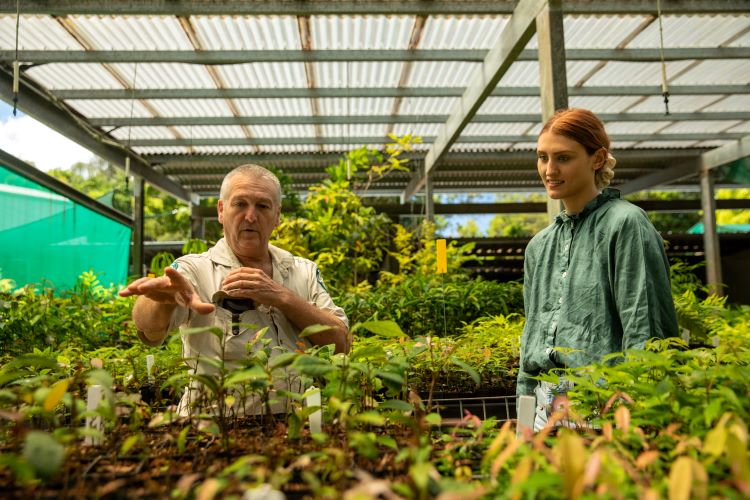
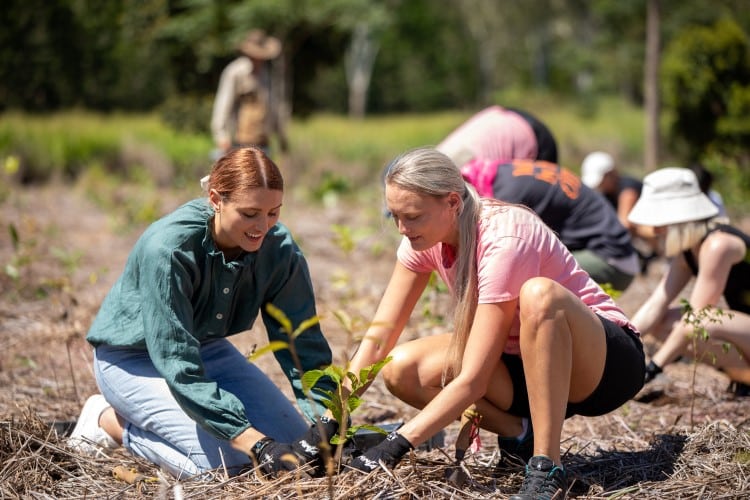
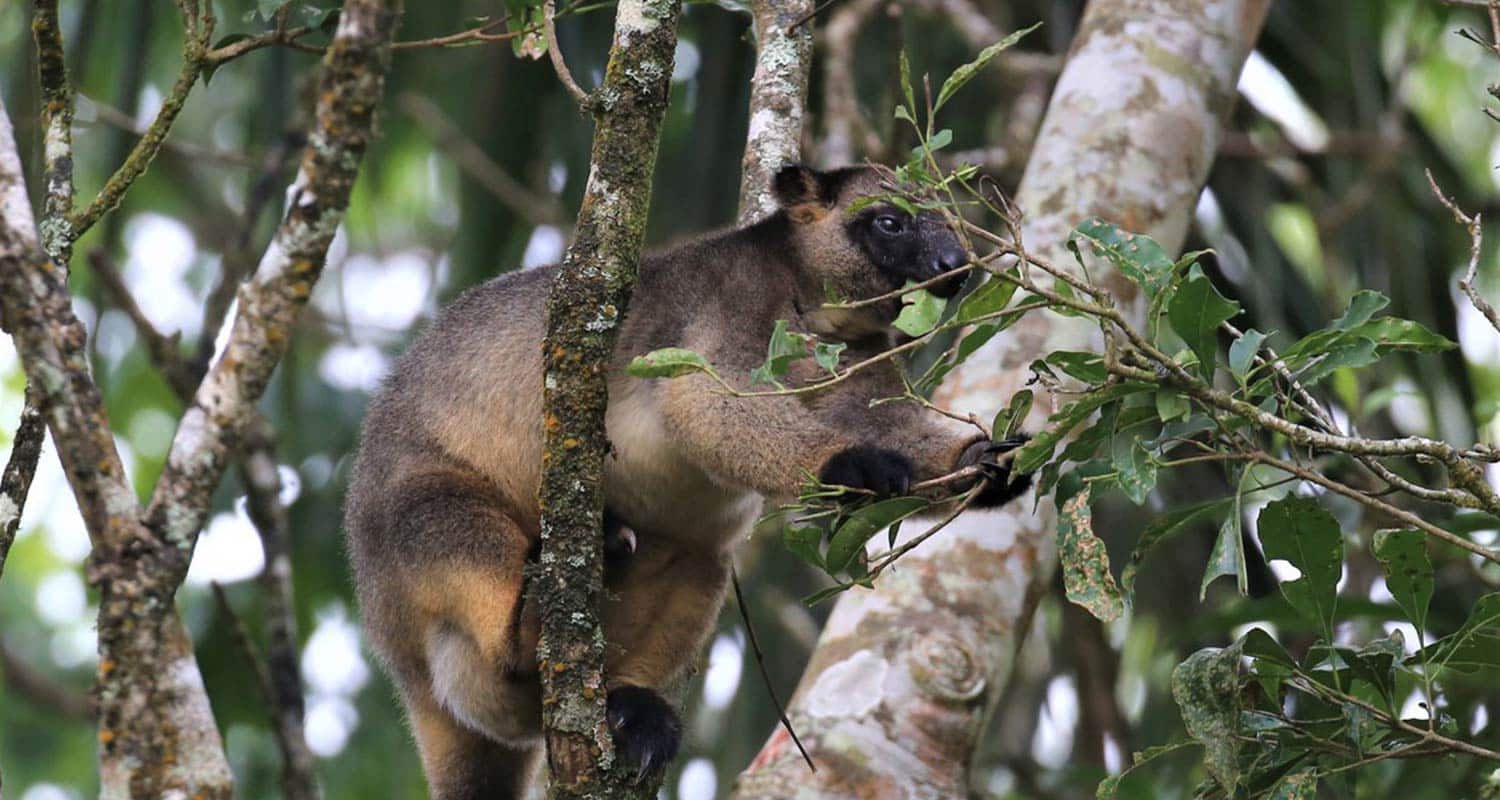
Events held at Cairns Convention Centre can utilise the Reforest program organised by Business Events Cairns & Great Barrier Reef. Through the program delegates help eliminate the event’s carbon impact by supporting localised tree planting and revegetation programs, like the endangered Mabi rainforest which is the home of the Lumholtz tree kangaroo on the Atherton Tablelands.
View the Conference Reforest Dashboard
Discover how many trees were planted, the land restored for the Tree Kangaroo, and the CO2 removed from events previously held at the Cairns Convention centre via the below dashboard.
Other environmentally sustainable features of the centre include:
- Rainwater storage for plant irrigation (tank approx. 200,000L capacity)
- Biophilic design incorporating a living green façade
- High performance glazing with Low E film coating increasing energy efficiency by up to 30%
- 1200 sun blades and living green façade optimised to reduce direct sunlight onto façade, reducing heat gain and increasing thermal efficiency.
- Two electric vehicle charging stations
- New chillers and BMS across providing more energy efficient equipment and controls.
- Energy efficient fans
- Landscaping with a minimum of 50% native plants to improve local biodiversity
- Heat reducing elements through design features including shading, planting over façade and high-performance glass
- Energy Efficiency through LED lighting with motion sensors
- Water saving measures through low-flow fitting and fixtures and moisture sensitive irrigation of planting
- E-water (electrolysed water) in lieu of chemicals for food safety sterilisation.